The final school bell rings, the teachers wave goodbye, and for many families, it marks the start of sun-soaked adventures. But for you, that sound might feel more like a countdown. As you walk away from the school gates on the last day of term, that familiar knot of anxiety tightens in your stomach.
You aren't thinking about ice cream at Shibden Park or day trips to the coast. You’re thinking about the sudden loss of a 9-to-3 routine, the sensory overwhelm of busy public spaces, and the six-week stretch ahead without the specialist support your child relies on every day.
We are right there with you
If you are feeling more dread than delight this July, please know that you are not alone. We are right there with you. It is exhausting to hold the weight of a six-week transition when your child thrives on predictability. It is heavy to feel the guilt of not being able to provide a "picture-perfect" summer because your priority is simply keeping everyone regulated and safe.
The "summer holiday gap" is a very real thing for SEND (Special Educational Needs and Disabilities) families. While other parents are booking multi-activity camps, you are likely scouring the internet for a single hour of a sensory-safe session that won't cost a week's grocery budget. We see the effort you put into every minute of every day. Your best is more than enough, even on the days that feel like you're just surviving.
Why summer hits differently for SEND families
For neurodivergent and disabled children, "holiday" often doesn't mean a break; it means a disruption. The structure of the school day provides a safety net of transitions, familiar faces, and sensory regulation that disappears overnight.
Without that structure, we often see:
- Loss of routine: When the "then and next" of the school day vanishes, anxiety levels can skyrocket.
- Sensory overload: From louder-than-usual parks to the unpredictable noise of summer festivals, the world becomes a much louder, brighter, and more overwhelming place.
- Reduced support: Respite services often have long waiting lists, and many school-based therapies pause during the break, leaving parents to fill every role: caregiver, therapist, and entertainer.
- Social isolation: Without the school community, it’s easy for both children and parents to feel cut off from the world.
What the national data tells us
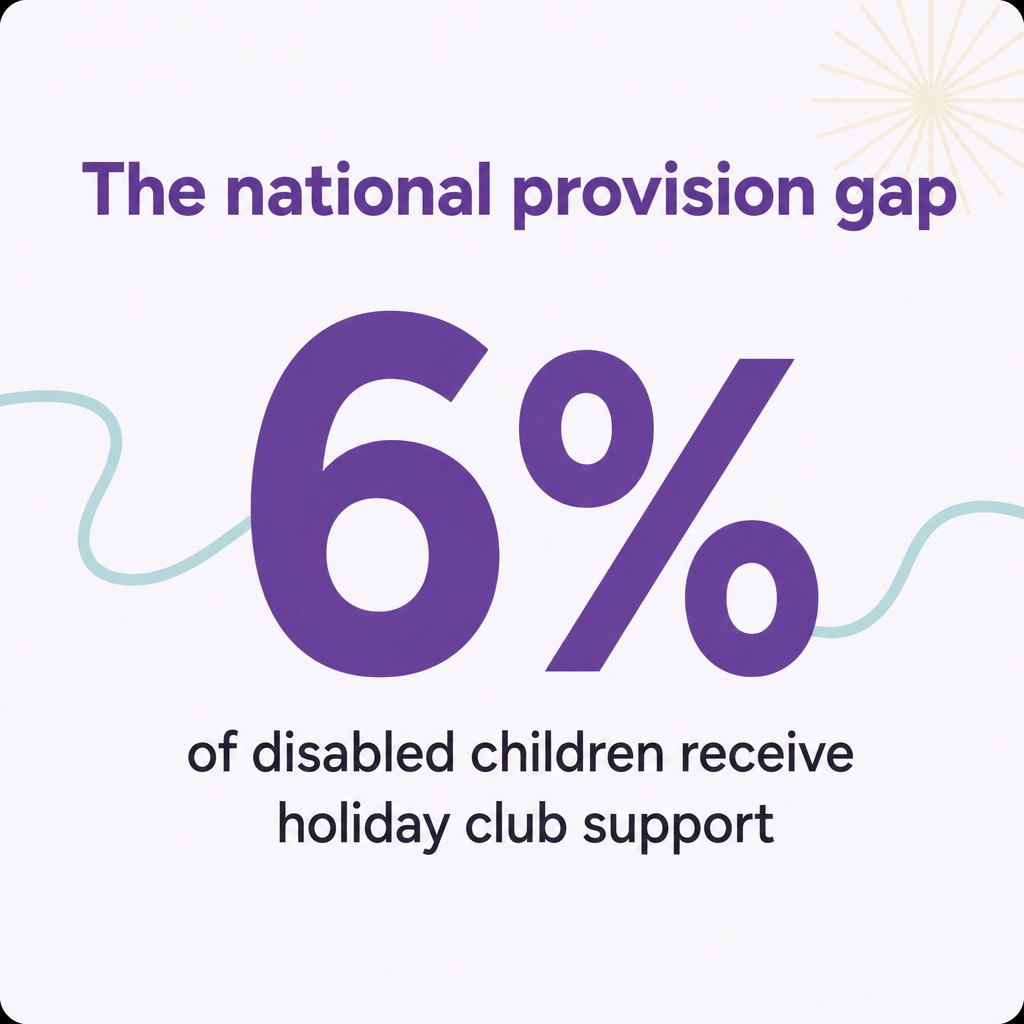
This year, the national conversation has finally caught up to what we’ve known for a long time. A recent report by the charity Sense has highlighted a "stark postcode lottery" when it comes to holiday provision for disabled children.
The findings are heartbreaking but unsurprising to those of us living it:
- Only 6% of disabled children receive any holiday club support commissioned by their local authorities.
- One in ten councils commission zero dedicated holiday clubs for disabled children.
- 61,000 disabled children live in areas where there is absolutely no holiday club provision at all.
This isn't just a lack of "fun things to do." It is a fundamental lack of support that leaves families at breaking point. When provision doesn't exist, the responsibility falls entirely on parents, leading to a cycle of exhaustion and burnout.
The Calderdale reality
Here in Halifax and across West Yorkshire, we see these statistics playing out in our own community. While there are some wonderful private providers, the cost is often a huge barrier. Private sensory sessions can range from £25 to £50 per visit. For a family with multiple children or those living on a tight budget, this makes "inclusive" fun feel very exclusive.
We know that families in Calderdale are often left choosing between staying home in a safe but isolating environment or risking an expensive trip out that might end in sensory overwhelm within ten minutes. This is why we are so passionate about building a permanent hub: because every family deserves a space where they belong without having to pay a premium for it.
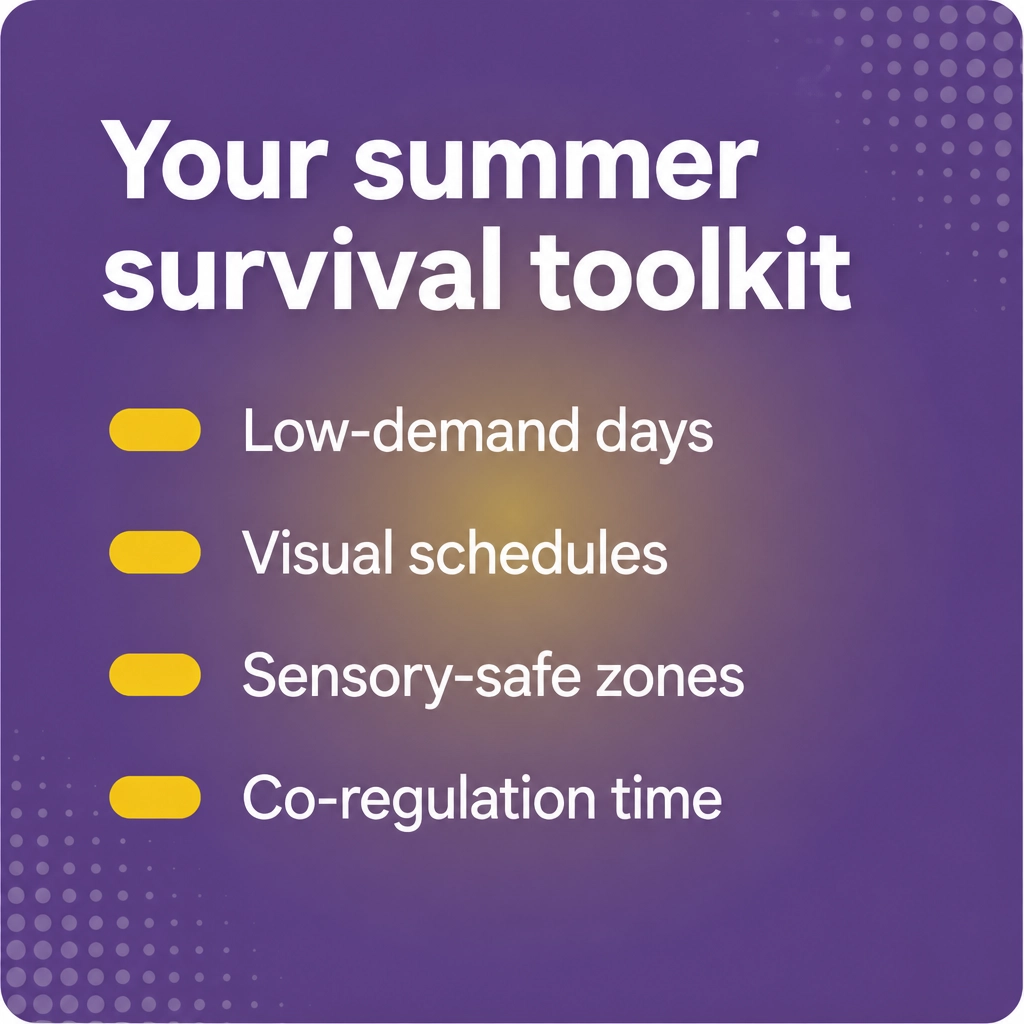
Your summer survival toolkit
While we work on the long-term solution, we want to help you navigate the next few weeks. Here is a practical toolkit to help lower the demand and protect your energy.
1. Embrace low-demand days
Lowering the demand doesn't mean "giving up"; it means prioritising peace over productivity. On high-anxiety days, it is okay to stay in pyjamas, order a takeaway, and let the house be messy. Reducing the number of "have-tos" can prevent a total burnout for both you and your child.
2. Use visual schedules
Just because school is out doesn't mean the visual timetable has to be. Even a simple "first/then" board for the day can help reduce the anxiety of the unknown. Knowing that "first we have breakfast, then we go to the garden" can provide the anchor a child needs.
3. Focus on co-regulation
When things get loud and difficult, remember that your calm is your child's best tool. If you're struggling to stay regulated yourself, you might find our guide to better co-regulation helpful. It’s about finding those small moments to breathe together.
4. Outdoor sensory play
You don't always need an expensive sensory room. A washing-up bowl of water in the garden, some kinetic sand, or a quiet corner of a local park like Savile Park can provide much-needed sensory input. Aim for "low-traffic" times: early mornings or later evenings are often much calmer.
5. Protect your own energy
You cannot pour from an empty cup. If you are feeling the signs of parental burnout, try to find even five minutes of "me time" where you aren't "on." Whether it's a coffee in the car or a quiet scroll on your phone, those micro-breaks matter.
Local support: Summer Sensory Sessions
We know that advice is only helpful if you have a place to go where people truly "get it." That’s why we are so excited to be launching our Summer Sensory Sessions on 30 July.

We will be running five free Thursday sessions throughout the summer at Little Stars Family Hub in Halifax. These sessions are designed to be a calm, understanding, and sensory-friendly environment where you can bring your children and simply be.
Currently, we have over 50 families on the waiting list, which shows just how much this provision is needed in our town. While we are running these sessions in temporary spaces, our ultimate goal remains: building a permanent, sensory-first community hub in Halifax that is open year-round.
Other local summer provision in Calderdale
It's also worth knowing that the Calderdale Local Offer website lists events and activities specifically for SEND families across the borough. You can browse what's available here: https://calderdalelocaloffer.org.uk/events
One example currently running is the Jam Packed Summer 2026 scheme at Ravenscliffe High School. This is a free summer scheme for disabled young people aged 8–19, running Mondays and Tuesdays from 20 July through to 11 August, 10am–3pm. The team of sports coaches have full access to all sport and leisure areas (excluding the swimming pool), and the school's layout and equipment are designed to ensure all disabled young people are fully accommodated. It's a great option for families who need structured, adapted sport and leisure activities over the holidays.
We always recommend checking the Local Offer regularly, as new provision can appear as the holidays approach.
Together we make space
The summer holidays are a marathon, not a sprint. If some days feel like a win just because everyone stayed fed and safe, then that is a successful day. You are doing an incredible job in a system that doesn't always make it easy for you.
We are working hard behind the scenes to create the permanent space our community deserves. Until then, we invite you to join our digital community, share your survival tips, and remember that you don't have to navigate this season alone.
Stay updated on our progress and find more resources by signing up for our community newsletter.
Together we make space for every family to shine.