
You’ve just asked your child if they’re hungry. They say "no" with absolute certainty, and then push their plate away. But an hour later, the atmosphere in the house shifts. They are suddenly inconsolable, screaming, or perhaps they’ve completely shut down.
When you finally manage to get a cracker or a piece of fruit into them, the "storm" passes almost as quickly as it arrived.
It is a moment almost every parent of a neurodivergent child knows. It’s confusing, it’s exhausting, and it often feels like you are playing a never-ending game of guesswork. You might find yourself wondering why they can’t just tell you they need a snack, or why they don't seem to notice they need the toilet until it's an emergency.
If this sounds like your daily reality, we want you to know that you are not alone. We are right there with you. At Noa's Place, we talk to families every day who are navigating these exact challenges.
It isn't that your child is being "difficult" or "ignoring" you. There is often a very real, biological reason for these moments, and it’s all down to a "hidden sense" called interoception.
What is interoception?
We all know about the five senses: sight, hearing, touch, taste, and smell. Many of us in the SEND (Special Educational Needs and Disabilities) community are also very familiar with the vestibular (balance) and proprioceptive (body position) senses.
But there is an eighth sense that is just as important, though it rarely gets the spotlight.
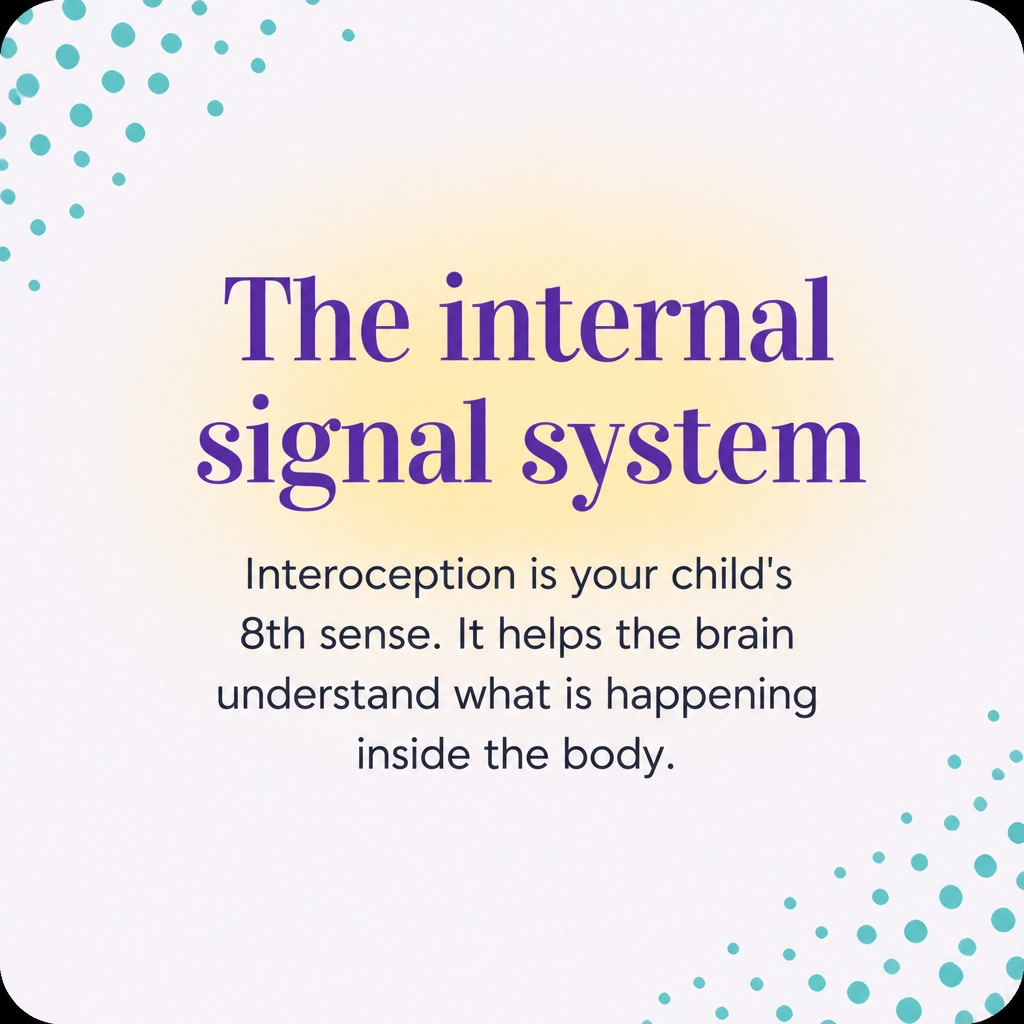
Interoception is the sense that allows us to feel what is happening inside our bodies. It is the internal messaging system that tells the brain what the body needs.
Think of it as a collection of sensors located in your organs, skin, and muscles. These sensors send signals to the brain to help it understand:
- Hunger and thirst: That "empty" or "gnawing" feeling in the stomach.
- Toileting: The pressure of a full bladder or bowel.
- Temperature: Feeling too hot or too cold.
- Heart rate: Feeling your heart racing when you’re scared or slow when you're calm.
- Pain: Noticing an ache, a sting, or a cramp.
For most people, these signals are clear. You feel a rumble, you eat. You feel a chill, you put on a jumper. But for many autistic and neurodivergent children, this internal messaging system works differently. The signals might be too loud, too quiet, or completely scrambled.
How interoception difficulties show up in daily life
When a child's interoceptive sense is out of sync, it affects almost every part of their day. It’s not just about "noticing" a feeling; it’s about how that feeling, or the lack of it, dictates their behaviour and emotional state.
Eating and drinking
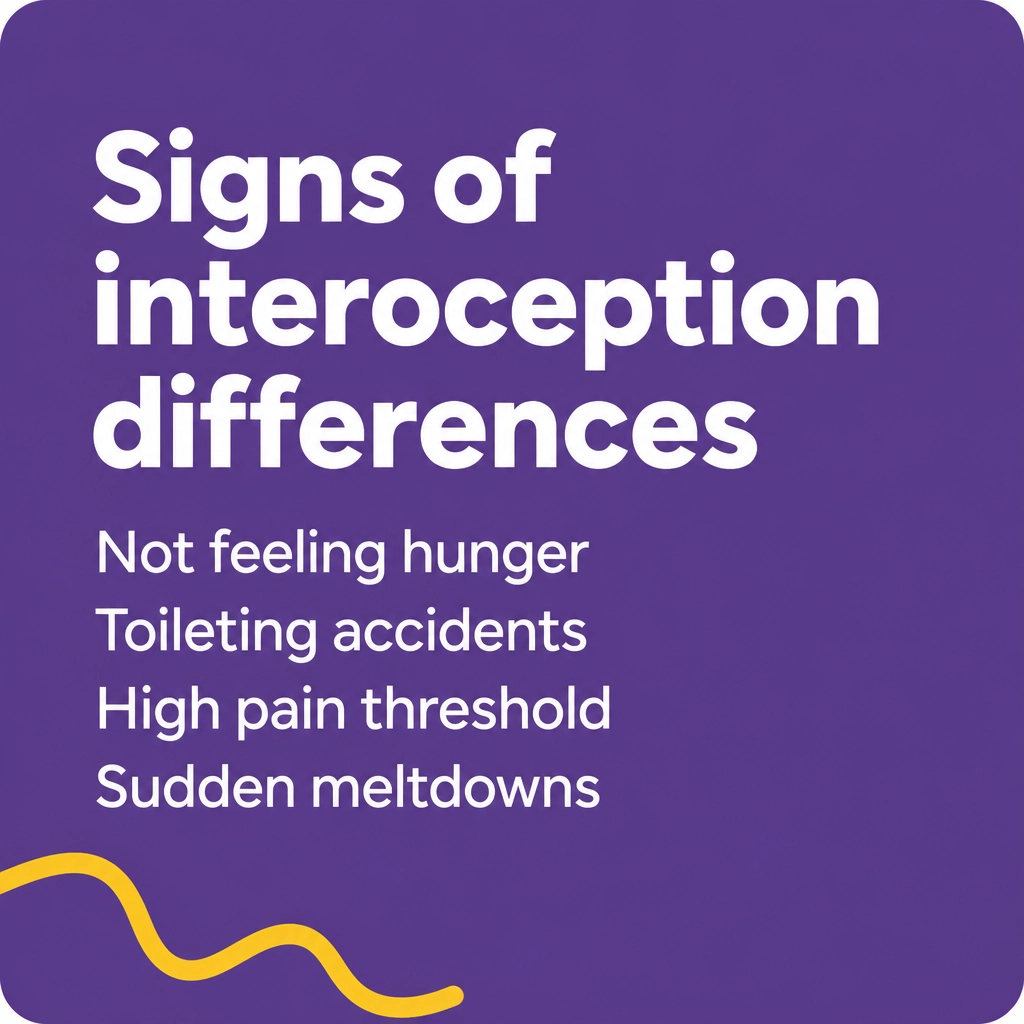
If a child has "muted" interoception (hypo-interoception), they might genuinely not feel hunger until their blood sugar has dropped significantly. By the time the brain finally receives the "I'm hungry" signal, the child is already in a state of physical distress. This is often why the "hangry" meltdowns in neurodivergent households are so much more intense.
On the other hand, some children might feel these signals too intensely (hyper-interoception), making the sensation of a slightly empty stomach feel like actual pain, leading to constant grazing or anxiety about food.
Toilet accidents
Toileting is one of the biggest areas where interoception plays a role. If a child doesn't feel the gradual "filling" sensation of their bladder, they won't know they need to go until it is literally overflowing. This can lead to "sudden" accidents or a desperate dash to the bathroom with no warning. For many parents in Halifax and across West Yorkshire, this can make the journey toward independent toileting feel much longer and more complicated than for neurotypical peers.
Sleep and restlessness
Getting a child to settle for sleep requires them to notice they are tired. If those "heavy eyes" or "sleepy body" signals aren't being picked up, the child might continue to zoom around at full speed, becoming increasingly overtired. They might also be distracted by their own internal sensations, like their heartbeat or the feeling of their digestion, which can make falling asleep feel impossible.
Meltdowns that come "out of nowhere"
This is perhaps the most difficult part for families. Most meltdowns aren't actually "sudden", they are the result of a slow build-up of internal stress.
Usually, a person might notice their heart racing, their muscles tightening, or their breathing becoming shallow and think, "I'm getting stressed, I need to take a break." But if a child doesn't notice those early warning signals, they stay in the stressful situation until they reach a breaking point. To the outside world, it looks like an explosion from nothing. In reality, it was a pressure cooker with a broken gauge.
Why neurodivergent children often struggle with interoception
In the neurotypical brain, there is a smooth "conversation" between the body and the brain. In the neurodivergent brain, particularly in autistic children or those with ADHD, this conversation can be interrupted.
This can happen for a few reasons:
- Sensory Overload: If a child is already overwhelmed by loud noises, bright lights, or itchy clothes, their brain may "tune out" internal signals to try and cope with the external chaos. You can read more about this in our guide to sensory overload.
- Gating: The brain has a "filter" that decides which information is important. Sometimes, this filter doesn't work effectively, and the brain either ignores important body signals or gets flooded with too many at once.
- Processing Speed: It can simply take longer for the brain to make sense of the signal. By the time the brain has "translated" the signal into "I need a drink," the child is already dehydrated.
Understanding that this is a neurological difference, not a choice, is the first step toward finding ways to help.
How to help your child build interoceptive awareness
The good news is that interoceptive awareness is like a muscle; it can be strengthened with practice. You aren't trying to "fix" your child's brain, but rather helping them build a "map" of their own body.
Here are some practical things you can try tonight:
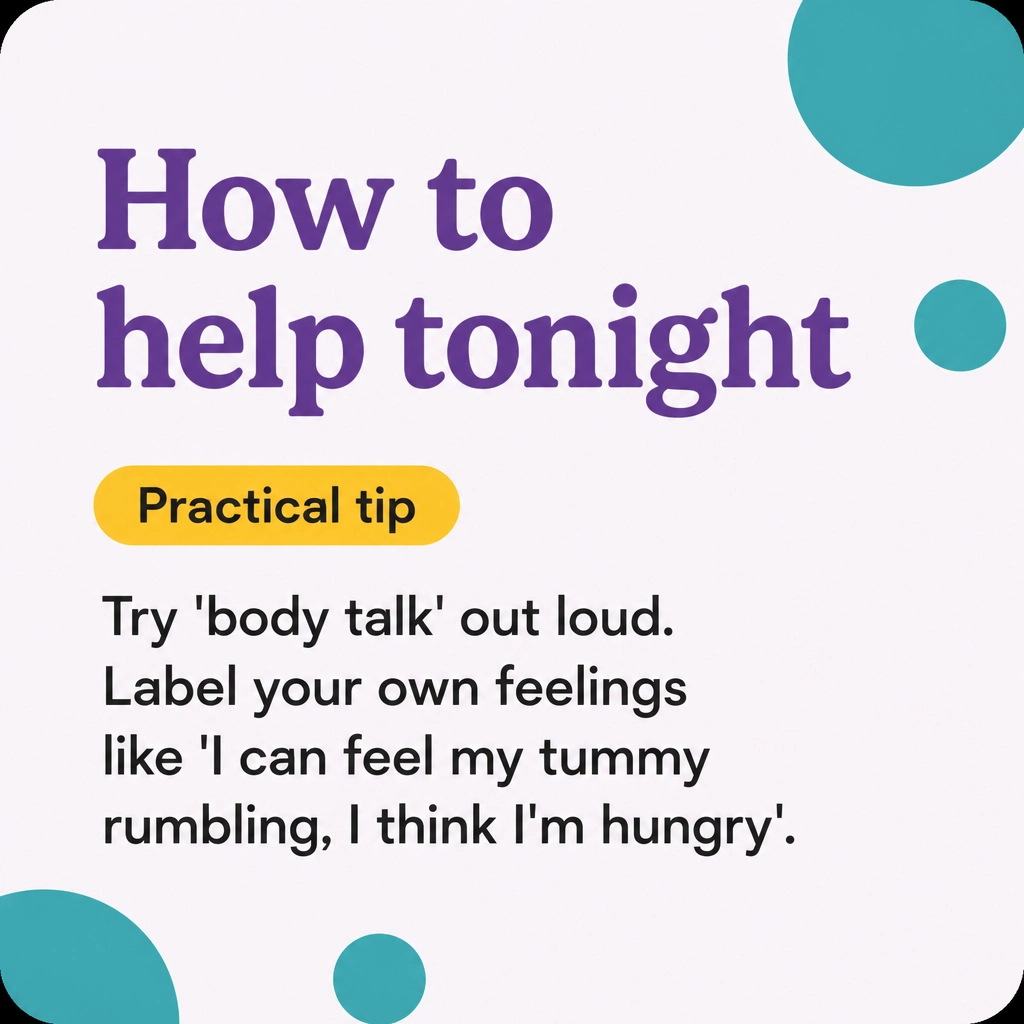
1. Use "Body Talk" out loud
Model the process of noticing body signals. Instead of just saying "I'm hungry," explain how you know.
- "My tummy feels empty and it's making a little growling noise. I think that means I'm hungry, I'm going to have a snack."
- "I'm shivering and my skin feels bumpy. That tells me I'm cold. I'll put my cardigan on."
2. The "Check-In" routine
Pick a calm moment, maybe during dinner or before bed, to do a quick body check. Use concrete language. Instead of "How do you feel?", ask "How does your tummy feel? Is it quiet, or is it rumbly?" or "Put your hand on your heart, is it a slow drum or a fast drum?"
3. Visual reminders
Since internal signals can be unreliable, use external ones. A visual schedule that includes "Drink water" or "Toilet break" every two hours can take the pressure off the child to "feel" the need. We have some great tips on using visuals in our Surviving the Summer Holidays guide.
4. Focus on Co-Regulation
When your child is struggling because they haven't noticed their body's needs, they need you to be their "external brain." This is called co-regulation. By staying calm and helping them meet the physical need (like a drink or a quiet space) before the meltdown peaks, you are teaching them what those signals mean. Check out our parent's guide to co-regulation for more on this.
How Noa's Place can help
At Noa's Place, we understand how isolating it can be when you’re the one constantly trying to decode your child’s needs. Our founder, Josh Barnes, started this charity because he lived this reality with his son, Noa. We know what it’s like to worry about the "sudden" meltdowns or the toilet accidents that feel like a step backward.
We are currently working hard on building a permanent sensory-first community hub in Halifax. This won't just be a playroom; it will be a space designed from the ground up to be sensory-aware. We are creating calm, low-arousal environments where children can play and explore without the constant "static" of sensory overload. This environment makes it much easier for a child's brain to start noticing those internal interoception signals.
While we build the physical hub, our community is very much active. We offer:
- Free Interactive Tools: Our website features tools to help you and your child explore feelings, transitions, and coping strategies. You can find them on our Interactive Tools page.
- Summer Sessions: We are currently running live community sessions in Halifax during the summer of 2026. These are safe spaces where you don't have to explain your child's behaviour, everyone there "gets it."
- Advocacy and Support: We provide practical help for families in Calderdale navigating the SEND journey.
You are welcome exactly as you are. There is no need to mask or try to "fit in" at Noa's Place. We are building a community where everyone belongs, just as they are.
If you are feeling overwhelmed today, please take a breath. You are doing an incredible job navigating a path that is often invisible to others. Start small: maybe just one "body talk" comment today: and see where it leads.
If you’d like to learn more about our upcoming sessions or explore our digital support guides, click the link below to see our latest interactive tools.
Explore our Interactive Support Tools →
Together we make space.
[Sonny handoff brief]
- Key Message: Interoception is the "hidden sense" that explains why many ND children struggle to notice hunger, toileting needs, or early stress signals. Understanding this reduces parent guilt and provides a path to support.
- Target Audience: Parents/carers of autistic or ADHD children in Halifax/West Yorkshire who are struggling with "out of nowhere" meltdowns or toileting/eating issues.
- Social Formats:
- Instagram Carousel: "What is the 8th sense?" Slide 1: Hook about hunger meltdowns. Slide 2: Definition of interoception. Slide 3-6: How it affects Eating, Toilet, Sleep, Meltdowns. Slide 7: Quick tip (Body Talk). Slide 8: Noa's Place hub vision.
- Facebook Post: Focus on the "I see you" moment of the hunger meltdown and invite parents to share their experiences.
- Quotes: "Most meltdowns aren't actually 'sudden': they are the result of a slow build-up of internal stress."
- Caption Hook: Have you ever asked your child if they're hungry, they say no, and an hour later the world ends? It might not be "behaviour"( it might be interoception.)