

It is 2:00 PM on a Tuesday, and you are sitting on the floor of your bathroom with the door locked. Outside that door, the world is loud. Maybe there is the sound of a repetitive YouTube video, the thud of a sensory seeking jump, or the heavy silence of a child who has completely shut down. You are staring at the tiles, and for the first time today, you are breathing without someone needing something from you.
If you have ever found yourself in this "shower cry" moment, please know that we are right there with you. You might be searching for answers because parenting an autistic child is exhausting, but what you often find is advice on how to "do more" for your child. Today, we want to talk about you.
I see you : and you are not failing
There is a specific kind of tired that sleep cannot fix. It is the exhaustion of being "on" 24 hours a day, seven days a week. It’s the weight of the invisible backpack you carry, filled with therapy appointments, EHCP paperwork, sensory triggers, and the constant need to translate the world for your child.
When you feel resentful that you can’t just "pop to the shops," or when you feel numb because you’ve spent three hours managing a meltdown, the guilt can be suffocating. You might look at other parents and wonder why they seem to be "coping" better.
Here is the truth: you are not failing. You are a human being operating under a level of chronic stress that most people will never have to navigate. According to Carers UK, 73% of carers are at breaking point. You aren't "bad" at this; you are simply carrying more than any one person was ever meant to carry alone.
Why this is harder than most people realize
People often say "all parenting is hard," but SEND (Special Educational Needs and Disabilities) parenting is a different landscape entirely. It is the cumulative load of four major weights:
- Constant Advocacy: You aren't just a parent; you are a legal researcher, a medical coordinator, and an educational expert. Navigating the SEND system in West Yorkshire can feel like a full-time job without a lunch break.
- Sensory Management: You are constantly scanning the environment. Is the hand dryer in this café too loud? Is the lighting in the supermarket going to trigger sensory overload? You are your child's external nervous system.
- The Masking Tax: If your child "masks" (hides their autistic traits to fit in) at school, you are the one who deals with the "after-school restraint collapse" when they get home. You are their safe space, which often means you get the hardest version of them.
- Hyper-vigilance: Even when you are sleeping, you are listening for the monitor or the sound of a door opening. Your brain is never truly off-duty.
This isn't just "parenting." This is high-level crisis management, performed daily without an exit strategy.

Understanding the signs of parental burnout
Burnout is what happens when your internal resources are completely drained, but the demands keep coming. It is more than just being "a bit tired." Here is what it actually looks like in our everyday reality:
- Emotional Numbness: Feeling like you are watching your life through a thick pane of glass. You might find it hard to feel joy, even in the "good" moments.
- Irritability and Resentment: Snapping at things that wouldn't normally bother you. You might feel a deep sense of unfairness about your situation.
- Detachment: An unconscious "switching off." You might find yourself scrolling on your phone just to escape the mental noise of the room.
- Physical Symptoms: Brain fog, frequent headaches, or catching every cold that goes around because your immune system is compromised by stress.
In the clinical world, they call this "caregiver burden." In our world, we call it being human. If you find your child's EBSA (Emotionally Based School Avoidance) or daily transitions are pushing you over the edge, it is a sign that your system is overloaded.
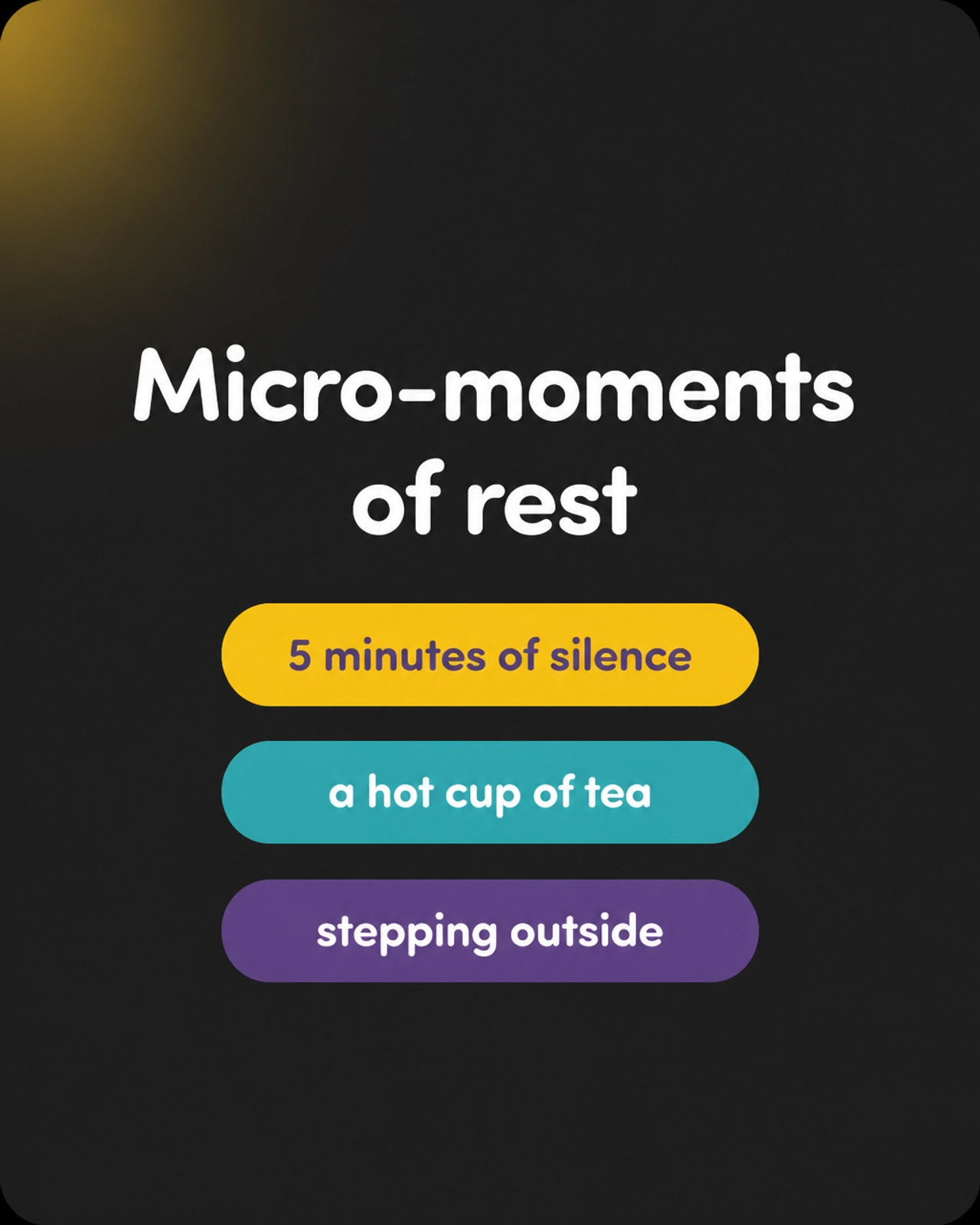
Permission to stop: The micro-moments of rest
We aren't going to tell you to "go for a spa day" or "just take a bath." When you have a neurodivergent child, those things are often impossible to arrange. Instead, we want to give you permission to embrace "low-demand parenting" for yourself.
What you can do this week:
- Lower the Housework Bar: If the dishes aren't done but you managed to sit down for ten minutes, that is a win. The house doesn't need to be perfect; it just needs to be functional.
- Strategic Use of Screens: If putting on a favourite movie for the third time today gives you twenty minutes of quiet to drink a hot cup of tea, do it. Use the tools you have to create a gap for yourself.
- The 5-Minute Decompression: When things feel like they are boiling over, step into another room (if it is safe) for 120 seconds. Focus only on your breath. This is co-regulation in reverse: you cannot help your child regulate if your own "bucket" is overflowing.
- Say No: You do not have to go to the family gathering where people judge your parenting. You do not have to explain your child's needs to strangers. Protect your energy like it is a precious resource, because it is.
Supporting our Calderdale community
Living in Halifax and the wider West Yorkshire area, we know that support can feel thin on the ground. Whether you are waiting for an assessment at the Child and Adolescent Mental Health Services (CAMHS) or trying to find a local park that isn't too crowded, the isolation is real.
While we are building our permanent sensory-first hub in Halifax, we want you to know that the community is already active. You don't have to wait for a building to find people who "get it."
We recommend checking out the Calderdale Local Offer for specific service listings, but for the days when you just need to be around people who won't stare if your child has a meltdown, stay tuned for our community sessions. We are creating a space where the "mask" can come off for both the kids and the parents.
You are not alone
At Noa's Place, we were founded on the belief that families shouldn't have to reach a crisis point before they get help. Josh started this charity because he knew the "storm" of being told to wait while his own son was struggling.
We are building a village for you. A place with sensory rooms where your child is safe, and a community café where you can sit with a coffee and talk to someone who knows exactly what a "shower cry" feels like.
You are doing an incredible job in a very difficult situation. Be as kind to yourself as you are to your child today.
Together we make space.
- Caption Hook: Have you ever locked the bathroom door just to breathe for 30 seconds? You're not alone. Let's talk about parental burnout.