You’re sitting at the kitchen table. It’s 10:00 PM. The house is finally quiet, but your mind is racing. Around you are stacks of school reports, doctor’s letters, and half-filled forms that feel like they’re written in a different language.
If you’ve ever felt like you’re preparing for a legal battle just to get your child the help they deserve at school, you aren’t alone. At Noa's Place, we know that the world of SEND (Special Educational Needs and Disabilities) can feel like a maze designed to keep you out.
When Josh Barnes first started navigating the SEND journey with his son, Noa, he realised that the system is often more about paperwork than it is about the person. Noa is the heart of what we do here, and seeing him thrive despite the hurdles is why we are building this community. We are currently an online-led organisation applying for charity status (our CIO application is officially in progress!), and our goal is to make sure no parent feels like they’re shouting into a void.
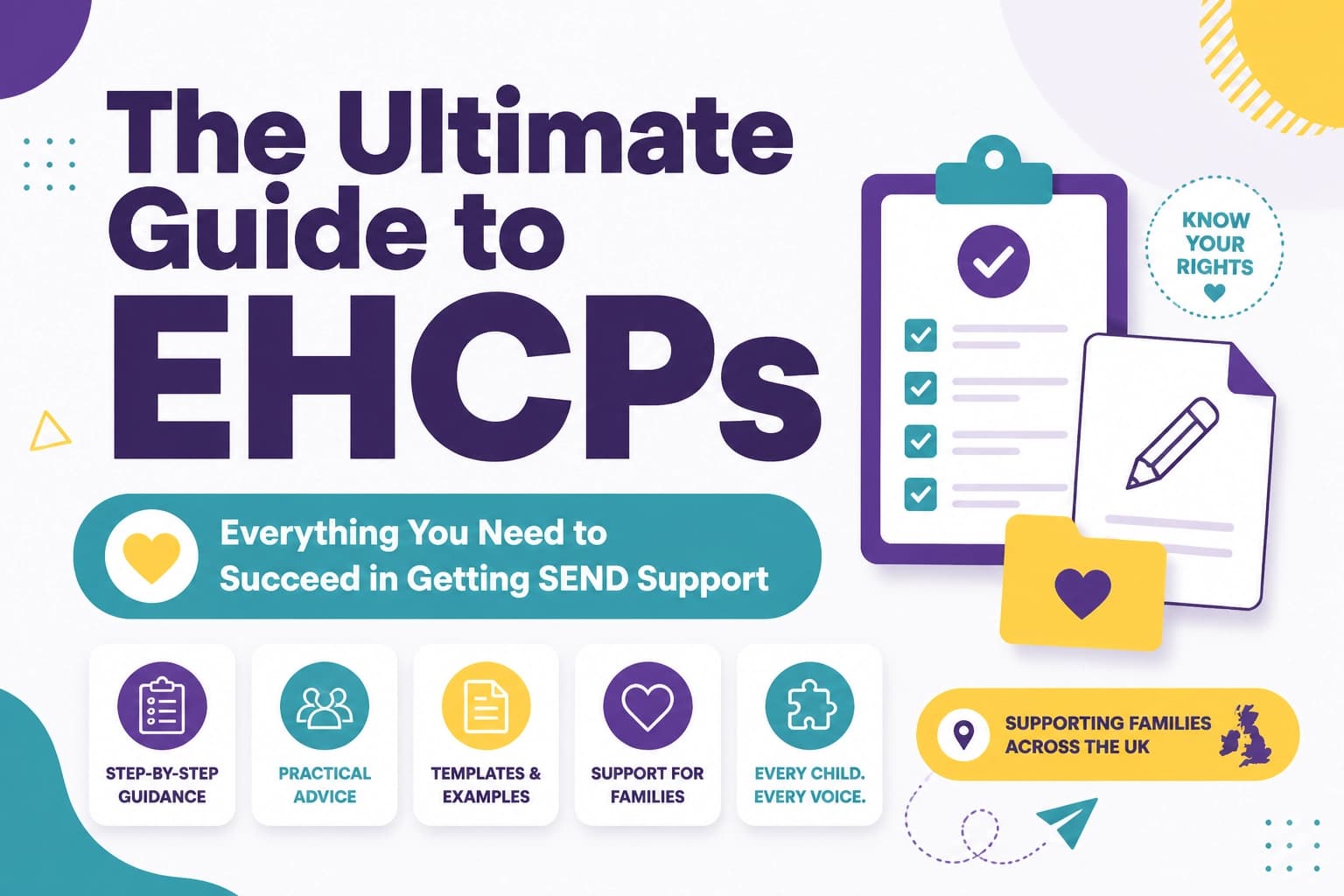
Today, we’re going to break down the "Big Boss" of SEND support: the Education, Health and Care Plan, or EHCP.
What actually is an EHCP?
Think of an EHCP as a legal "golden ticket." In simple terms, it is a document that describes your child’s needs, what support they must have, and who is responsible for providing it.
Unlike a standard school support plan, an EHCP is legally binding. This means that if the document says your child needs five hours of speech and language therapy a week, the Local Authority (LA) is legally required to provide it.
It isn’t just about school, either. It covers three main areas:
- Education: What help they need to learn.
- Health: Medical needs or therapies like physiotherapy.
- Social Care: Support at home or in the community.
It’s designed for children and young people from birth up to the age of 25 who need more support than a mainstream school can typically provide from its own budget.

Do I really need one? (The "Assess-Plan-Do-Review" Cycle)
Before you jump into the EHCP deep end, most schools will try something called "SEN Support." This follows a cycle called Assess, Plan, Do, Review.
- Assess: The teacher notices your child is struggling.
- Plan: They agree on some extra help (like a reading group).
- Do: They put that help in place.
- Review: After a term, they check if it worked.
If your child goes through this cycle a few times and they still aren’t making progress, or if their needs are clearly very complex, that is when you start looking at an EHCP.
Don't let anyone tell you that you must wait years before applying. If you feel the school’s current support isn't enough to keep your child’s head above water, you have the right to ask for an assessment.
The 20-Week Marathon: How the Process Works
The EHCP process is a bit of a marathon. From the moment you ask for an assessment to the moment the final plan is issued, it should take no longer than 20 weeks. Here is the breakdown:
Step 1: The Request (Weeks 1–6)
Anyone can request an EHCP assessment, you, the school, or even a doctor. However, we always recommend that you, as the parent, make the request yourself. This starts the legal clock.
By the end of week 6, the Local Authority must tell you "Yes" or "No" to an assessment. If they say no, don't panic, you have the right to appeal this decision.
Step 2: The Assessment (Weeks 6–16)
If they say yes, the "Information Gathering" phase begins. The LA will talk to the school, doctors, educational psychologists, and, most importantly, you.
This is where you need to be the "Expert on your child." You know Noa better than any doctor who sees him for twenty minutes. You know what makes your child tick, what causes a meltdown, and what makes them smile.
Step 3: The Draft and Final Plan (Weeks 16–20)
If the LA decides an EHCP is necessary, they will send you a "Draft Plan." This is your chance to check every single word. Once you agree, the "Final Plan" is issued, and the support must start.

How to Succeed: Tips for the Application
Getting an EHCP approved can feel like a game of "Spot the Difference." The Local Authority is looking for evidence that your child’s needs are "long-term, complex, and significant."
Here are three ways to make your application stronger:
1. Evidence is King
Keep everything. Every email from a teacher saying your child had a "difficult day," every private report, and even your own diary of how things are at home. If you are dealing with sensory issues, our Sensory Overload Tool can help you describe exactly what is happening to professionals.
2. Focus on "Specific and Quantified" Support
When you get to the draft stage, look out for "weasel words." These are words like regularly, as required, access to, or opportunities for.
- Bad: "Noa should have regular access to a teaching assistant."
- Good: "Noa will receive 15 hours of 1-to-1 support from a trained Teaching Assistant every school week."
Specific language means the school can't wiggle out of providing the help.
3. Use the "All About Me" Approach
The LA sees hundreds of files. You want them to see your child, not just a list of diagnoses. We have created specific tools to help you build a profile that captures your child’s voice. Whether they are a toddler or a teenager, these can be a game-changer:
Using these tools helps you present a human side to the paperwork, ensuring the "Care" part of the EHCP actually reflects your child’s personality and dreams.
What if they say "No"?
It happens. In fact, many Local Authorities say "No" to the initial assessment as a default. It’s heartbreaking, but it is not the end of the road.
You have the right to Mediation and Tribunal.
- Mediation is a meeting where an independent person tries to help you and the LA reach an agreement.
- Tribunal is a legal hearing. Most parents find this terrifying, but the statistics are on your side: the vast majority of parents who go to Tribunal end up winning their case or reaching a settlement.
If you’re feeling overwhelmed, look up your local SENDIASS (Special Educational Needs and Disabilities Information Advice and Support Service). They are free, confidential, and specifically there to help parents navigate this process.

Life with an EHCP: The Annual Review
Once you have the plan, it isn't set in stone forever. It must be reviewed at least once every 12 months. This is called the Annual Review.
This is your chance to say, "This is working," or "This really isn't working anymore." As children grow, their needs change. A child moving from primary to secondary school will need a very different plan. If you’re worried about these big jumps, our Transition Plan tool can help you prepare for the meeting.
A Final Word of Encouragement
We know how exhausting this is. We know the weight of the "Parent Guilt" and the fear that you aren't doing enough. But by even reading this guide, you are already doing the work. You are your child’s best advocate.
At Noa's Place, we are building more than just a website; we are building a digital home for families like ours. While we don't have a physical centre yet, we are working hard behind the scenes on our charity application so we can do even more to support you.
If you need a break from the paperwork or just a way to help your child process their feelings while you wait for support, take a look at our interactive tools. From bullying support to coping with big feelings, we’ve designed them to be simple, welcoming, and: most importantly: on your side.
You’ve got this. And we’ve got you.
Want to learn more about our journey? Meet the team at Noa’s Place or get in touch if you have questions about our resources.