You’re in the middle of the supermarket, maybe the one at the Woolshops in Halifax, and suddenly everything changes. The hum of the fridges sounds like a jet engine. The bright fluorescent lights feel like they’re pulsing. Your child, who was fine two minutes ago, is now on the floor, or perhaps they’ve gone completely silent and "checked out."
In that moment, the world feels very small and very loud. You might feel the heat rising in your neck as people walk past, or that familiar knot of exhaustion tightening in your stomach.
If you’ve been there, please know that we are right there with you. We know that look in your eyes: the one that says you’re doing everything you can to keep things together while the world feels like it’s falling apart. You aren’t doing anything wrong, and neither is your child. You’re both just navigating a world that wasn't built with their sensory needs in mind.
It’s Not Just "Being a Bit Stressed"
When people ask "what is sensory overload," they often think it’s just about being overwhelmed by a loud noise. But for our neurodivergent and disabled children, it’s much more intense than that.
Think of your child’s brain like a busy motorway junction. Usually, the traffic flows in the right lanes. But during sensory overload, every single car tries to take the same exit at the exact same time. The system jams. Nothing can move, and the "engine" starts to overheat.
Sensory overload happens when the brain receives more information from the senses: sight, sound, smell, touch, taste, and even movement: than it can process. For an autistic child or someone with sensory processing differences, the "volume" on the world is often turned up to eleven. What feels like a background hum to you can feel like physical pain to them.
What Actually Happens in the Body and Brain
When the brain hits that "jam," it triggers the body’s survival mode: fight, flight, or freeze. This isn't a choice your child is making; it’s a biological reaction.
Their heart rate goes up, their breathing changes, and their "thinking brain" (the part that handles logic and language) effectively switches off. This is why, when a child is overloaded, asking them "what’s wrong?" or "can you stop?" often doesn't work. They literally cannot process your words because their system is focused entirely on surviving the sensory "attack."

How to Spot the Signs Before the "Storm"
Every child is different, but sensory overload usually leaves "bread crumbs" before a full meltdown or shutdown happens. Learning to spot these early signs can help you step in before the system completely jams.
1. The Physical Cues
You might see them covering their ears, squinting at lights, or pulling at their clothes (because suddenly that shirt tag feels like a saw). They might start pacing, rocking, or "stimming" more intensely than usual.
2. The Emotional Shift
They might become suddenly irritable, snappy, or incredibly restless. For some children, the sign isn't "loud": it’s quiet. They might stop talking, hide under a table, or look like they are staring through you. This is often called a "shutdown," and it’s just as much a sign of overload as a loud meltdown.
3. The "Losing Skills" Moment
If your child is usually great at following instructions but suddenly seems like they can’t understand simple directions, their brain might be reaching capacity. They haven't forgotten how to listen; they just don't have any "bandwidth" left for language.
Why Our Kids Experience It Differently
Most of us have a "filter" that helps us ignore the sound of the dishwasher or the smell of someone’s perfume across the room. Many neurodivergent people don't have that filter. Every single piece of sensory data comes through at full strength. If that overload builds into a bigger response, we've written more about why meltdowns happen here.
This is why we talk so much about the need for sensory-friendly spaces. It’s not about "special treatment"; it’s about making the environment accessible. At Noa's Place, we’re building a permanent sensory-first community hub in Halifax because we believe every family deserves a space where the "volume" of the world is finally turned down.
Your Practical Sensory Toolkit
Managing overload is a two-part job: reducing the "input" coming in and helping the body "regulate" what’s already there. Here are five things you can do this week to help.
- The "Low and Slow" Approach: When you notice the signs, lower your voice and slow down your movements. Use as few words as possible. "Quiet space now" is better than a long explanation.
- Create a "Den" at Home: It doesn't have to be fancy. A pop-up tent with some blankets and a few calming tools can give them a place to retreat when the house feels too busy.
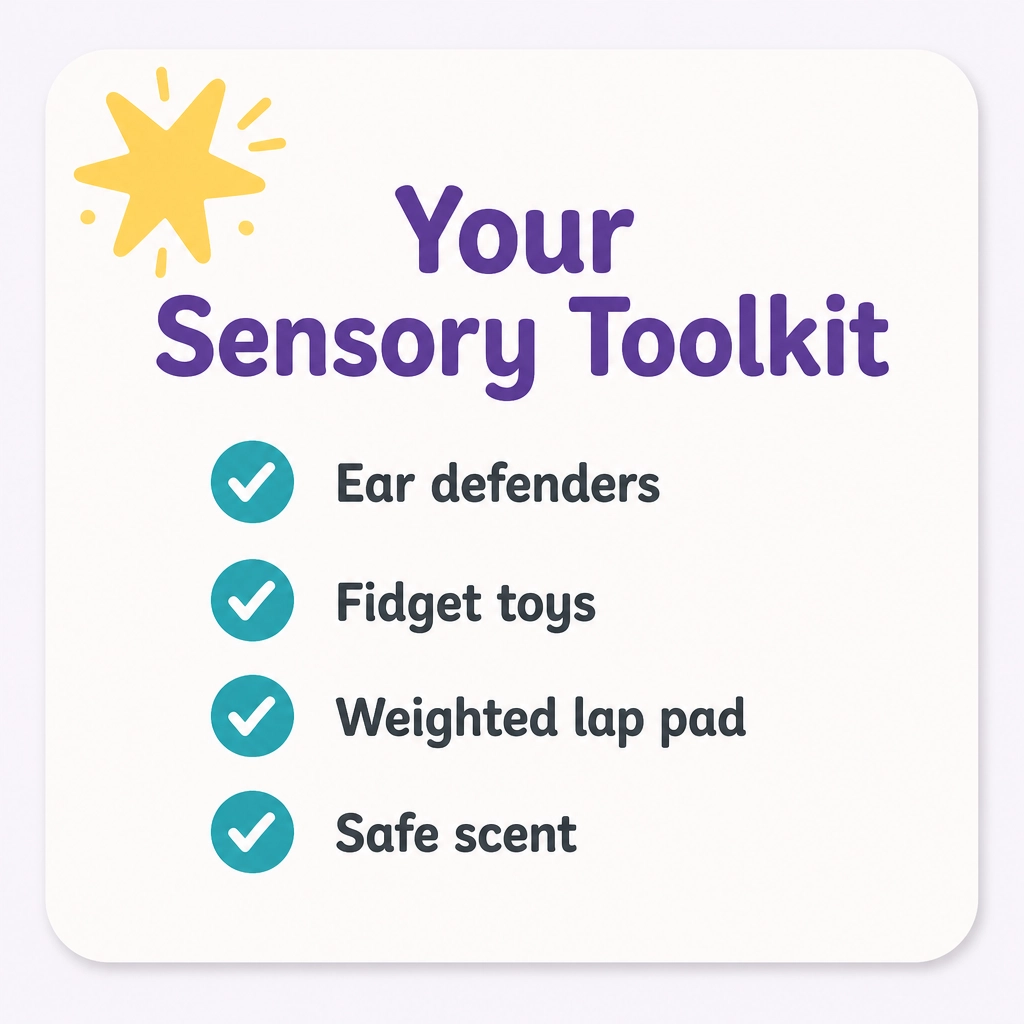
- Pack a "Go-Bag": Keep ear defenders, a favorite fidget, and a "safe scent" (like a cloth with a smell they love) in your bag for trips into Halifax town centre.
- Use Visuals: When the brain is overloaded, processing speech is hard. Using simple picture cards or even hand gestures can help communicate without adding to the noise.
- Build in "Buffer Time": If you know you have a busy appointment at Calderdale Royal or a trip to a noisy birthday party, plan for 30 minutes of "low-sensory" time (dim lights, no screens) both before and after.
And if school avoidance is part of your child's sensory story, we've got a guide for that too.
Local Support in Halifax and West Yorkshire
Navigating SEND (Special Educational Needs and Disabilities) in Calderdale can feel like a full-time job. We know that finding a place where you don't have to apologise for your child's reaction to the world is rare.
While we are working hard on building our permanent hub, we are very much active in the community. Our current sessions are designed specifically for families who need a "mask-free" zone. Whether your child needs to run, scream, or sit in total silence in a corner, they are welcome.
If you’re out and about in Halifax, some local spots are becoming more sensory-aware:
- The Woolshops: Often have quieter times during weekday mornings.
- Eureka! The National Children's Museum: They offer sensory bags and have a dedicated chill-out room if things get too much.
- Noa's Place: Keep an eye on our sessions and plans as we continue to grow our community support across West Yorkshire.

You Are Doing Great
It is incredibly draining to be the "buffer" between your child and a loud, bright world. If you feel "touched out" or overwhelmed yourself, that is a completely valid response to a very difficult situation.
At Noa's Place, we’re more than just a building project. We’re a group of families who get it. We’re building a space where Noa, and all children like him, can just be. No judgment, no "shushing," just a community that understands.
You don't have to navigate this journey alone. Whether you’re right at the start of your SEND journey or you’ve been at this for years, there is a seat at our table for you.
Together we make space.
Want to stay updated on our progress and get more tips like this? Sign up for our newsletter or follow us on social media. We’re building something special in Halifax, and we’d love for you to be part of it.
Check out our Interactive Coping Tools here
[Sonny Handoff Brief]
- Key Message: Sensory overload isn't a tantrum; it's a physical response to an overwhelming world. We understand the struggle and are building a space for these families.
- Target Audience: SEND parents in Halifax/Calderdale who feel isolated during meltdowns/shutdowns.
- Social Formats:
- Instagram Carousel: "Is it a meltdown or sensory overload?" (using the signs graphic).
- Facebook Post: A relatable "I see you" post about the supermarket struggle.
- TikTok/Reel: A quick "3 things in my sensory go-bag" video.
- Key Quote: "Your child isn't giving you a hard time; they are having a hard time."
- Caption Hook: "Ever felt like the world was just too loud? For our kids, that’s every day. Here’s how to spot the signs of sensory overload before the storm hits. 💜 #NoasPlace #HalifaxSEND #SensoryOverload"
Meta Description: What is sensory overload? Learn the signs, the science, and practical tips for SEND parents in Halifax and Calderdale. You're not alone — we're building a sensory-first community hub for West Yorkshire families.